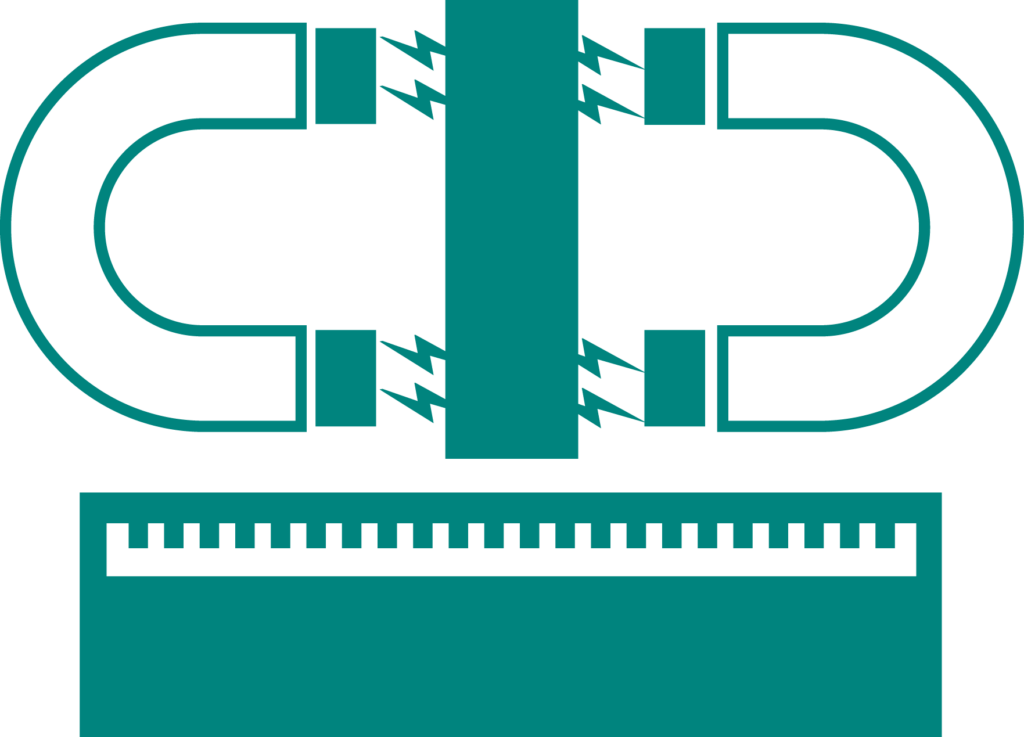
Different clamping principles have different advantages and disadvantages. Sophisticated combinations can solve even difficult clamping problems, expand machining options, and increase the range of workpieces that can be machined. Talk to us about your specific requirements—we design customized solutions that combine the properties of magnetics, hydraulics/mechanics, vacuum technology, pneumatics, and electrics.
Translated with DeepL.com (free version)
This results in completely new performance parameters for your manufacturing efficiency. However, the different machining technologies are also characterized by a very different range of performance. In order to develop the best possible solution for your needs, it is therefore essential to have an expert assessment of all factors in combination. These include, for example ...
To the product finder
… in the case of magnetism:
very flexible and convenient control
extensive automation
no second media supply in combination with magnet
suitability for all workpieces
Suitable only for ferromagnetic workpieces
physical limitation of the adhesive force
high normal force, low tangential force
flat force introduction
Pull-down of thin, uneven workpieces
high damping
good accessibility, ease of cleaning and automation
large workpiece spectra
distortion-free clamping
complete support of the workpiece (high damping, high precision)
Multi-side machining in one setup
compact design
short setup times
Ergonomics, operational safety and low wear
cost-effective compared to power-operated tension
… in the case of hydraulics/mechanics:
Suitability for all workpieces
High to very high force density
Point-like force application and high force density
Low-distortion blank clamping
Suitable for non-magnetic workpieces
Low damping
Limited accessibility and ease of cleaning
Risk of workpiece deformation and damage
Limited workpiece range
More complex systems, including those with appropriate energy input
… in the case of pneumatics:
Point-like force application
Lower force density compared to hydraulics
Low-distortion blank clamping
Suitability for non-magnetic workpieces
Low damping
Limited accessibility and ease of cleaning
Limited workpiece range
Large clamping elements
More complex systems
Simpler energy supply compared to hydraulics
Better price/performance ratio compared to hydraulics